What AI-Generated Art Is and What It Is Not
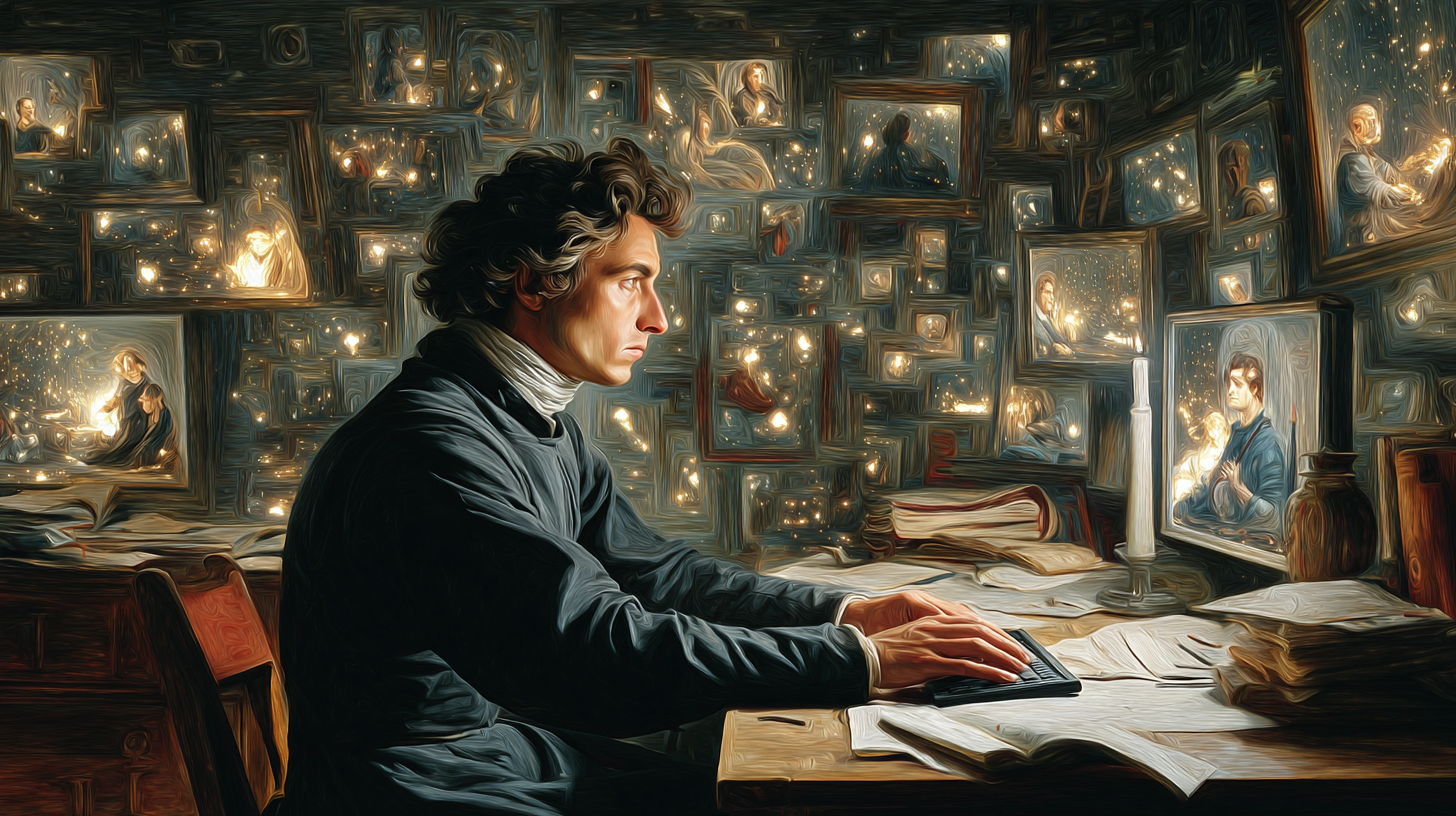
Artificial intelligence has arrived in the art world with all the grace of a marching band in a library. It is loud, controversial, exciting, overhyped, misunderstood, and here to stay.
A great many people have strong opinions about AI-generated art, but fewer people can clearly explain what it actually is. Some think it is fake art. Some think it is theft by default. Some think it is a magic machine that replaces artists. None of those views tells the whole story.
So let’s clear the fog.
AI-generated art is art created with the assistance of software systems that transform written prompts, image references, patterns, data relationships, and human direction into visual output. In plain terms, a person gives instructions, makes choices, revises results, and guides a process that produces images. That is the basic reality. It is not a paintbrush in the traditional sense, but it is also not a vending machine that spits out culture without human involvement.
The truth sits in the middle, where most real things do.
What AI-Generated Art Is
AI-generated art is a tool-driven creative process.
That matters. The software does not wake up with a memory, a heartbreak, a politics, a childhood, or a need to make beauty out of suffering. The human being does. The human selects the subject, tone, references, composition, mood, color relationships, and often the final image out of many failed attempts. The human decides what is worth keeping and what belongs in the trash.
In that sense, AI art is closer to photography, collage, digital compositing, and experimental printmaking than many critics would like to admit. Each of those methods depends on a process that includes selection, control, accident, revision, and judgment. The machine may handle part of the production, but the artist handles intention.
AI-generated art is also exploratory. It allows artists, designers, and curious amateurs to test visual ideas quickly. A single concept can be rendered as a surreal oil painting, a Bauhaus poster, a pulp magazine cover, a mid-century illustration, or a luminous cinematic tableau in minutes rather than days. That speed is not a replacement for taste. It is a demand for taste. When the machine can generate ten thousand possibilities, judgment becomes more important, not less.
It is also worth saying plainly that AI-generated art can be original in outcome even when it is influenced by traditions, movements, and visual languages that came before it. Art has always worked this way. Painters studied masters. Photographers borrowed framing. Designers borrowed type systems. Musicians borrowed chord progressions. Nobody created in a vacuum before AI, and nobody does now.
What AI-Generated Art Is Not
AI-generated art is not the same thing as hand painting.
That is not an insult. It is just true.
If someone spends ten years learning to draw the human figure, mix oils, stretch canvas, and control a brush with precision, that is a different discipline from writing prompts and curating outputs. The skills overlap in taste, composition, storytelling, and visual sensitivity, but they are not identical crafts.
AI-generated art is also not a substitute for all artists. The lazy fantasy that a software model can replace deep human vision is nonsense. Most AI images are forgettable because most visual choices are forgettable. The tool can generate surfaces very well. Meaning is harder. Coherence is harder. Wit is harder. Emotional depth is harder. A machine can imitate style cues. It cannot live a life.
AI-generated art is not automatically plagiarism either. That is where the argument often becomes sloppy. Influence is not the same as duplication. Referencing broad visual traditions is not the same as copying one specific copyrighted work. Problems arise when users deliberately try to recreate a living artist too closely, pass the work off as human-made without disclosure, or exploit someone else’s recognizable identity or intellectual property in a deceptive way. Those are real concerns. But it does not follow that every AI image is stolen by nature. That claim is too blunt to be useful.
Nor is AI-generated art proof that skill no longer matters. It simply changes where skill lives. Skill may now include prompt construction, art direction, source-image selection, editing, compositing, upscaling, typography, sequencing, narrative framing, and knowing when to stop. A bad user with a powerful tool still makes bad work. That old law remains in force.
The Human Role Still Matters
This is the point many people miss.
The value in art has never rested only in the labor. If it did, the largest painting would always be the best painting. The most brushed brushstroke would always win. But that is not how art works. Value comes from perception, sensibility, decision-making, arrangement, and meaning.
A good AI artist does not merely type a sentence and applaud the computer. A good AI artist pushes, refines, rejects, redirects, and shapes. They know when an image is empty. They know when a face is too polished, when a composition is dead, when a color palette is dishonest, when a concept is merely decorative. They bring taste, and taste is earned.
That does not make AI equal to every traditional medium. It does make it a real medium.
History has seen this before. Photography was once accused of being mechanical and therefore lesser. Digital art was dismissed as not real art. Collage was seen as scavenging. Even oil painting was once new technology. Tools change. Arguments repeat. Human beings panic. Then culture absorbs the tool and moves on.
Why People React So Strongly
Some of the anxiety around AI art is reasonable. Working artists worry about credit, consent, imitation, market pressure, and the devaluing of hard-won craft. Those concerns should not be brushed aside. They should be taken seriously.
But some of the reaction is not really about ethics. It is about status. When more people gain access to image-making, gatekeepers get nervous. When outsiders can produce visually striking work, some insiders become offended by the democratization of tools. That reaction also has a long history.
The camera expanded who could make images. Desktop publishing expanded who could design. Sampling expanded who could make music. AI expands who can experiment visually.
That does not erase excellence. It makes excellence harder to fake.
So Where Does That Leave Us?
AI-generated art is neither the death of art nor the pure salvation of creativity. It is a new instrument, and like every instrument it can be used badly, lazily, brilliantly, ethically, or stupidly.
It is not traditional drawing. It is not painting by hand. It is not automatically theft. It is not automatically genius. It is not free from ethical questions. It is not empty by definition.
It is a new creative territory where human judgment still matters most.
The real question is not whether AI-generated art is real art. That debate is already getting old. The better question is this: what can thoughtful people make with it that is worth seeing, worth discussing, and worth remembering?
That is the standard that has always mattered.
And it still does.